Today we talk about “The Buddha Speaks of Amitabha Sutra”. We have not turned to the first page yet, we’ve only seen the title. This title requires explanation in three parts.
The first is “Buddha“.
The second is “speaks“.
The third is “Amitabha“.
Let us first talk about “Buddha“.
As we all know, what people believe in now is “Buddhism”. Let me ask you all first: “What is Buddha?”
You will likely say: “Isn’t it useless to ask?”
You may say: “Buddha is sitting there.”
“What exactly is Buddha?”
“Is Buddha in the West?”
“Is Buddha in the temple?”
“Is Buddha in your heart?”
Ah! Buddha has supernatural powers and can change from here to there! Some people say that your mother is Guanyin Bodhisattva and your father is Amitabha Buddha. How long has Buddha lived in the world?
How did he come?
How did he go?
Everyone knew this in the past. I had also explained the definition of Buddha.
In the past:
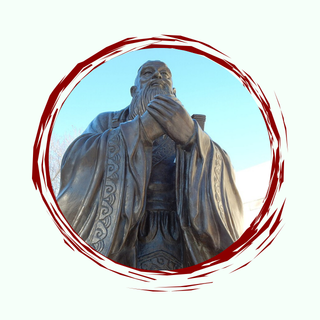
Some people said: The one carved from wood is the Buddha.
Some people said: The one made of copper is the Buddha.
If the person who carved the Buddha carved the Buddha into a certain shape, the Buddha is that shape.
Some people carved the Buddha with a bald head, so it is a bald head.
Some people carved the Buddha’s hair into a bun, so it is a Buddha with a bun.
Some people carved the Buddha with a beard, so it is a bearded Buddha.
Some people made the Buddha’s eyebrows white, so it is a white-browed Buddha.
In fact, the image of Buddha is ever-changing, but there is only one definition of him. If you refer to Buddha as those images, then it is wrong. It is like someone eagerly said: “I want to go to Leizang Temple to worship the Buddha.”
Philosophically this sentence makes sense, because there is Buddha in Leizang Temple.
Then I ask you another question: “Where is the Buddha?”
You answer: “In Leizang Temple.”
This then does not make sense in philosophy.
“There is Buddha in Leizang Temple, but the Buddha is not necessarily in Leizang Temple.”
This is because Buddha fills the entire void and fills the entire universe. So when you speak, you should pay special attention to this philosophical definition. Saying that there is Buddha in Leizang Temple, yes! There is indeed Buddha in it; but it does not make sense that the Buddha is in Leizang Temple.
I had spoken about this before, there was an old monk who had a very high level of cultivation, he was sitting on the dharma throne and there was a Buddha statue in front of him. Due to his old age when he coughed his spittle landed on the Buddha’s head. Many people saw this and said: “This old monk is not polite to the Buddha. If you want to spit, go outside and spit. How can you spit on the Buddha’s head?”
The old monk answered everyone, how did he say “Please tell me everyone, where is there no Buddha?”
This is a question that requires pondering!
In reality, where is there no Buddha?
I tell everyone, “You are all Buddhas.”
You know, those who have received the empowerment of Tantric Buddhism are all future Buddhas. In the future, ask the sculptor to carve all of your faces, all can be worshipped, all are Buddhas. Like that young lady listening to the sutra, but don’t look at her like that; this is the appearance of a Buddha. When the Buddha is carved it is like this.
Don’t be fooled by the few bald heads among them; even Buddhas will have bald heads in the future. Don’t be fooled by the many people wearing glasses; even modern Buddhas wear glasses. In esoteric Buddhism, every image—”every form is a form of Buddha.” Don’t look at the children making a snowman, as long as the snowman is built, as long as there is the spirit of the Buddha in it, the snowman is the Buddha.
I tell you all, there is a precept in Tantric Buddhism, the most important precept. This precept is “killing oneself is killing the Buddha.” Because you yourself are the future Buddha, if you kill the future Buddha, what else are you killing if not the Buddha? Therefore, Buddhism is not about metaphysics, but it has philosophical principles within.
There are also Buddhas who sit there catching fleas, there are also Buddhas who lie on the street like drunks and sleep, there are also Buddhas who are like skeletons with no body left, only a skeleton left in the wilderness. People who are truly enlightened will know: “The appearance of all living beings is the appearance of the Buddha.”
Then what is the definition of Buddha? Two words, that is – “Awakened One“.
The “Awakened One is Buddha.”
The “Unawakened One is the Future Buddha.”
There are two definitions of this Awakened One: the first is “awareness” and the second is “enlightenment“. Why do people become Buddhas? Because they need to be aware of the troubles in life, and first realize that there are obstacles in life. Today I will talk to you about the word “awareness“. These words are also very important.
Many people can be said to have no awareness in their lives. When they are born, they become students and start to study, battling with exams. After graduating from school they start competing for their careers. They want to become team leaders, section leaders, then directors, managers and chairmans. Then they want to get married, what comes after marriage? It is to have children, then they have to manage the studies of the children, do work, marriage, and give birth to grandchildren.
Then when the career is successful and there are grandchildren, it is almost time to “rest in peace”! Some people hope that they will live longer so that they can see their grandchildren get married. Speaking about this, from birth to death, many people have never realized that “life is full of obstacles”. In fact, they have a lot of troubling matters, but they have no way to solve all the troubles in this life.
When we were young, we worried about exams. In our youth we sometimes were troubled by love. When we got married, we worried about marriage. Success or failure in career was also a worry. Physical illness was also a worry. Old age was also a worry. The harmony of interpersonal relationships was another worry. In this competitive world of life, worries are often endless, one wave after another without stopping.
Birth, old age, illness and death are actually the root of all troubles.
Fame, desire, wealth, food, sleep are also the root of all troubles.
These desires are actually the root of troubles but if you do not realize where these troubles come from and how you eliminate them, your whole life will pass in a daze. So first there is awareness, then comes enlightenment. We are all people with awareness now, because we have awareness, we know to cultivate. Then we know how to be enlightened, enlighten the whole light of the heart, same as the Buddha.
Enlightenment, in essence, is the elimination of afflictions and the attainment of complete liberation. I just replied to a letter today; a disciple has been asking me, “Master, please enlighten me on how to eliminate afflictions?”
I replied with a verse:
Where do afflictions reside?
They reside entirely within one’s own mind;
Since time immemorial, they were nonexistent;
One’s own mind is the master.
Today, I have talked so much about afflictions. Now, Guru is talking about where the afflictions are? Then Guru’s words are contradictory and irrelevant. In fact, my meaning is this, I have my own interpretation. I used to say often: “Before there was earth, where were the troubles?”
To say even closer, “Before there was you, where were your troubles?”
There was nothing in the first place! Because there is “you”, then there are troubles. Then aren’t the troubles in your heart? I said again: “Then after you die, where are your troubles?”
The troubles are gone again, so isn’t it that you are dragging a lot of troubles with you. So, this is a kind of philosophical thought.
There is a Chinese proverb:
There is another idiom “to invite trouble upon oneself.” Why do I say it is to invite troubles?
A disciple wrote to me and said that he had a fear of boarding a plane. He often reads the newspapers and reads about plane crashes. He reads until the shadow of plane crashes is implanted in his heart. He’s a businessman and must fly; he only flies when absolutely necessary.
Sometimes the moment he got on the plane his heart was full of fear. He closed his eyes and got in by feeling his way in. When the flight attendant closed the door, his fear reached its peak. He yelled to the attendant that he wanted to get out. The attendant said that the door was already closed, how could they open it to let him out?
He ran to the door and knocked hard, wanting to break it to get out.
He was like this every time he took a plane! So the attendants on the plane felt dizzy when they saw him coming. He wrote to me, saying, “How can I help him avoid this plane phobia?”
Because every time the door of the plane was closed, he would start knocking on the door to get out. The whole flight was ruined by him, and everyone was in a bad mood. When he got on the plane, everyone became unlucky.
The way I treated him was to have him take a plane every day, flying back and forth for a month. Because his hands would at least knock until he could no longer knock, and his voice would shout until he could no longer make any sound! When he could no longer knock or shout, he would realize that airplanes are actually very safe! There is nothing wrong with flying back and forth. This kind of psychological barrier is indeed “to invite trouble upon oneself“! This is:
There was another disciple, the moment he stayed in a hotel he would prepare a towel. He also puts a bit of soap on the towel saying that it can cover his nose and prevent him from being choked by smoke. Before going to bed, he must turn on the faucet and fill the bathroom with water. He said that when a fire starts, he can lie in the water and not be burned to death. Every time he arrives at the hotel, he must first find a way out (EXIT safety door) and find out how to escape. When I replied to him, I told him: “You might as well get a parachute!”
In fact, we can’t blame him for taking care of his own safety. We can’t blame him. This is a measure to protect himself. But it goes too far. It’s like this every time. You see, isn’t this very torturous?
Just like me, when I get on a plane or stay in a hotel, I often think like this: “With the blessing of the Buddhas and Bodhisattvas, everything will be fine.” Even if something happens, it’s fate. Right?
In fact, I can reduce the pain in the second half of my life, and there are so many people accompanying me, why not?
It’s better to go with many people than alone.
Where do you think the troubles are?
If people are so optimistic and open-minded, there will be no worries. So when many unexpected things really happen, I often take a look and say, “Oh! I am so lucky.”
If it was me, I would think it was nothing. We who have seen through life and death can know that “there is actually no problem in the world.”
When people wrote articles attacking Lu Sheng-yen in the newspaper, I asked, “Who is Lu Sheng-yen?”
Sometimes, when I read articles scolding me, I would say, “Oh! That’s so good! I can’t scold them as well as that!”
This is seeing through it! There is no “you”, how could there be a “you” before?
When you are equal to the universe, you are an enlightened person, an awakened Buddha. When you can realize the truth of Buddha, you are truly enlightened in your heart.
Where are the troubles?
Where are you?
Where am I?
All sentient beings are equal, so how can there be enemies?
What you love and what you hate are actually equal!
When you understand this truth, the light of your heart will be revealed, equal to perfect enlightenment! When you become aware of the troubles in life, and then use the power of awareness to gain enlightenment, you will become an enlightened person; an enlightened person is a Buddha. So, some people say that the Buddha statue is the Buddha, where is the Buddha?
If there is a Buddha here, then it is far from being a Buddha.
What we are talking about tonight is just one word – “Buddha“. You must believe in yourself. All of us sitting here are Buddha!
Om mani padme hum.