[Lecture 14] Explanation Of The Sutra Title – Sutra
Tonight we talk about the word “Sutra”.
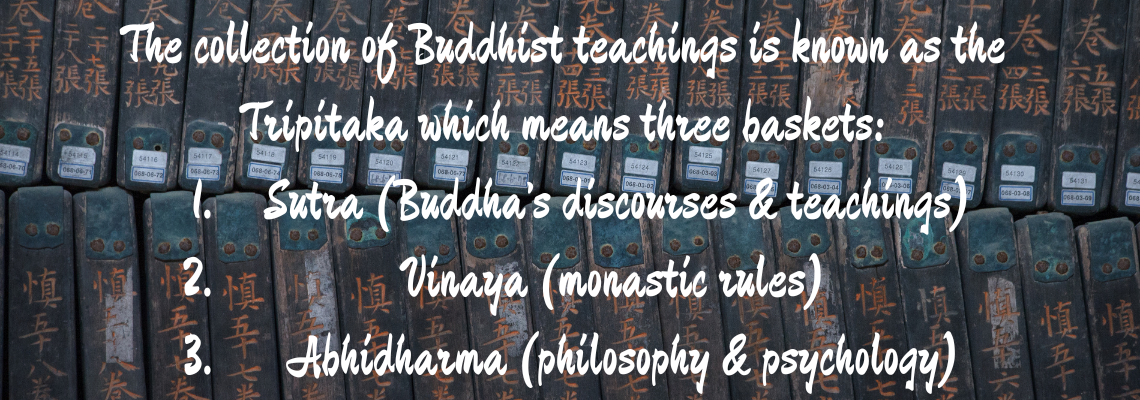
Actually “Sutra” is the first word of Tripitaka, which is Sutra, Vinaya and Abhidharma, so Sutra comes first. In ancient times, “Sutra” referred to the teachings personally spoken by the Buddha, which were later compiled together and these are called Sutras. Another name for Sutra is called “passage” and its meaning is from here to there. Another interpretation is a “path” that leads directly from here to there—this is what a sutra is.
“The Buddha Speaks of Amitabha Sutra” is a classic teaching spoken by Shakyamuni Buddha. I remember Jesus once said,
“I am the way.”
So, in a sense, we can also say Jesus said,
“I am the sutra.”
This particular Sutra was originally in Sanskrit, but it was translated into Chinese by a Master. The translation is credited as “Translated by Tripitaka Master Kumarajiva of the Yao Qin dynasty.”
“Yao Qin” refers to a specific dynasty.
“Tripitaka” represents Sutra, Vinaya, and Abhidharma. A Tripitaka Master is a monk who is proficient in all three baskets of the Buddhist canon.
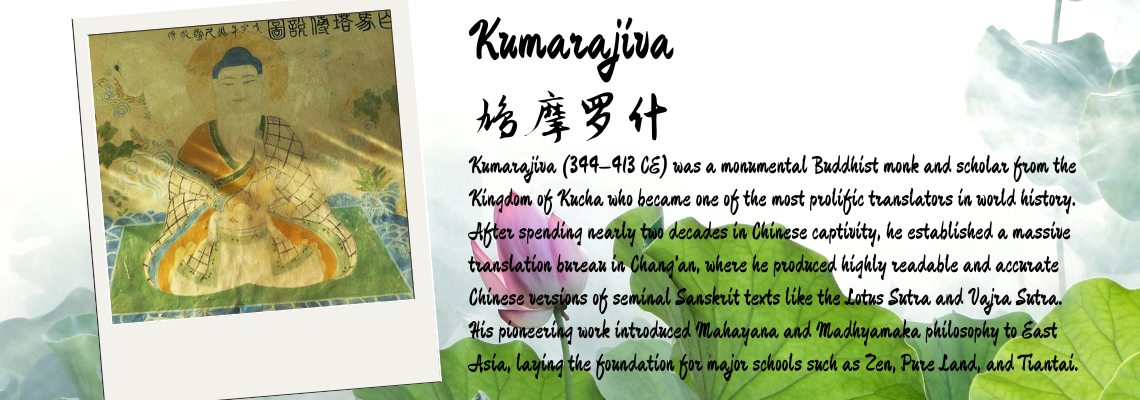
Kumarajiva was a very famous monk and a great achiever. He translated many Buddhist scriptures and had many disciples who followed him. Before he passed away, he said: “If the sutras I translated are correct, then my tongue will not be burned away.”
And indeed, after his cremation, his tongue remained intact and not burnt, which was taken as proof that Kumarajiva’s translations were truly accurate.
Kumarajiva was also a great scholar. He was Indian, and his ancestors on his father’s side were all high-ranking ministers (equivalent to prime ministers). Later, his father married a princess, and Kumarajiva was born from that union. Even as a child, he had incredible eloquence and was able to expound many scriptures. At a young age, he became a national teacher. He first studied the Hinayana (Theravāda) teachings, then moved on to study the Mahayana teachings, and eventually returned to guide and liberate his former Hinayana teacher.
Kumarajiva made significant contributions to the translation of Buddhist texts into Chinese. His name spread from India all the way to China. He was invited to China by Fu Jian to help translate the scriptures.
The name “Kumarajiva” in Sanskrit means “Child of Longevity” which is a child. However he had great wisdom, and so his name Kumarajiva also aptly describes his life journey.
If you want to learn more about what happened in the life of Kumarajiva, you can read a Chinese book called “Biographies of Eminent Monks” (《高僧傳》), which contains detailed records about him. This high monk who translated the sutras also possessed great spiritual powers.