Living Buddha Lian-sheng believes that the Amitabha practice of mantra, mudra, and visualization presented here is not complicated. If practitioners follow the instructions and practice consistently over time, they will become increasingly proficient. Every time when entering the altar to cultivate, practice will make perfect. One can even comprehend the essence, truly enter samadhi.
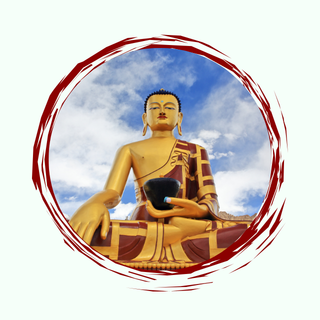
There are many different images of Amitabha Buddha on the market. Some are seated on lotus thrones with hands in meditation mudras and holding alms bowls. Some Amitabha Buddhas are standing with lotus pedestals in their hands. Some have both hands forming the “Wish-granting mudra”, in a welcoming posture, and so on.
The visualization can be used flexibly:
Holding an alms bowl filled with nectar: “Visualize the nectar transforming into white light and entering the crown of the head.”
Holding a lotus pedestal: “Visualize the lotus flower transforming into white light shining on the meditating practitioner.”
Both hands forming the wish-granting mudra: “Visualize the light from the white urna between Amitabha Buddha’s eyebrows rotating, rising into the air, forming an arc, the light shining into the crown of the head, and filling the entire body with radiance.”
Living Buddha Lian Sheng says: “The visualization in esoteric Buddhism can be applied flexibly, the most important thing is to fix the mind on one form of Amitabha Buddha.”
After the Nine Cycle Breathing, if one wants to continue practicing inner fire to incinerate the light drops, it is also possible.
If someone after reciting the “High King Sutra” wants to recite the “Amitabha Sutra”, it is also possible.
When dedicating, if one wants to cultivate on the behalf of another, they can add the following:
“I dedicate the merits of this practice to [insert their name here], so that he may be reborn to the Buddha Pure Land, or establish a karmic connection with the Buddha sooner, or repent and turn to good etc.”
Dedication can also be applied flexibly, it does not have to be fixed and rigid.
Living Buddha Lian Sheng, in his book “The Great Perfection”, on page 141, wrote the Sadhana for the esoteric practice of Amitabha Buddha Personal Deity Practice. This esoteric practice is more complex, requiring the recitation of the “Seven-Branch Prayer” and “transformation visualization.” Some disciples find it difficult to learn, therefore, I have specially written a simpler “True Buddha School Amitabha Buddha Practice Procedure.” The two methods have equal power and merit. Practitioners can compare them.
Some Tibetan Living Buddhas believe that the easiest way to attain achievements, the most reliable and fastest Great Esoteric Practice to attain Buddhahood is still the Amitabha Buddha esoteric practice.
I believe this statement is very true, because Amitabha Buddha’s forty-eight great vows are extraordinary. The Western Pure Land of Ultimate Bliss welcomes all beings, regardless of their capabilities. In the Pure Land school, reciting the Buddha’s name, as long as one single-mindedly seeks rebirth in the Pure Land, or single-mindedly recites the Buddha’s name seeking Amitabha’s compassionate guidance, one will succeed just by reciting the Buddha’s name for seven days before death.
I believe that the Pure Land school’s “belief in rebirth” is a direct shortcut to be reborn. A practitioner of Esoteric Buddhism who visualizes, goes deeper than the Pure Land school, cultivates the Amitabha Buddha practice, will achieve “Amitabha is my true nature, I am Amitabha, Amitabha is me, this mind is the Buddha, this Buddha is the mind, nothing is left unaccomplished.”
Living Buddha Lian Sheng realized, among all Buddhas who relieve suffering, in the Saha World, Amitabha Buddha is number one. Even a three year old can recite a line of “Amitabha Buddha.” The light of Amitabha Buddha can be divided into “Immeasurable light, Boundless light, Unobstructed light, Incomparable light, Blazing King Light, Pure light, Joyful light, Wisdom light, Unceasing light, Inconceivable light, Ineffable light, Light Surpassing the Sun and Moon.” The Western Pure Land of Ultimate Bliss has Realm of the Three Grades and Nine Classes of Rebirth.
I have seen these dharmalaksanas of the Amitabha Buddha:
- Dharmakara Bhikshu, Amitabha Buddha.
- Dharma Realm meditation mudra Amitabha Buddha.
- Guiding Wish-granting Amitabha Buddha.
- Jeweled Crown Amitabha Buddha.
- Red Crystal Amitabha Buddha.
- Contemplating for five kalpas Amitabha Buddha.
- Holding a lotus pedestal Amitabha Buddha.
- Three-faced, six-armed Amitabha Buddha (this form is rarely seen, originates from Mayajalamahatantra).
- In Esoteric Buddhism, Amitabha Buddha is one of the five wisdoms of Mahavairocana, giving rise to the Samadhi of Wondrous Observation in the West. The Womb Realm is located to the west of the Central Eight-Petal Court, and the Diamond Realm is located to the west of the Five Wheels of Liberation, this is the expedient wisdom of the Tathagata.
The “Amitayurdhyana Sutra” states: